
Copy of Lesson 2: Pacific Northwest Artists

Materials to Download
Lesson Overview
This lesson will build on Lesson 1 and introduce students to Native American musicians/artists who are from the entire Pacific Northwest region. This will include musicians whose Indigenous heritages come from Alaska, Washington, and Idaho.

Pacific Northwest Artists Biographies and Listening Activity
√ Distribute Thinking Organizer #2
This thinking organizer will allow for students to listen and react to the videos and stories of Indigenous people from the Pacific Northwest. After each biography and listening, allow some time for students to take notes and write down their thoughts with the guiding questions.
Lesson Procedure
- Students will assist in choosing or the teacher will choose the various musicians that will be listened to in class.
- Make sure the students are taking notes via their thinking organizer.
- The teacher should be pointing out different aspects of the artists’ work for the students to think more in depth.
- After listening to each musician/artist, have students pair up and discuss what they learned about the artist.
- Have them test each other on the various facts about the artist.
- Additionally, have them explain how the music made them feel and if they could figure out the meaning of the type of performing art that was expressed in the video.
John Angaiak
Yup’ik Eskimo
Born in Nightmute, Alaska, in 1941, his family lived in Tununak, Nelson Island, Alaska.
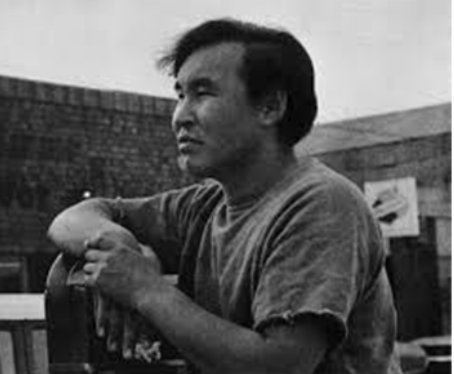
- “Until eighth grade, Angaiak went to a Bureau of Indian Affairs school in the small community of Tununak and was forced to speak English…The family used Yup’ik at home.”
- “He enrolled at the University of Alaska, where he became employed by the Eskimo Language Workshop (ELW) as a Yup’ik advisor. “(ELW’s) goal was to convert previously oral traditions of the local native people into a new, tangible written language that could help to preserve elements of Yup’ik culture. Stories and Music were used as tools.”
- “Angaiak also successfully challenged the University to classify Eskimo languages as a “foreign” non-English prerequisite…(which) provided an opportunity for Native students to learn more about their heritage while receiving academic credit.”
- “ELW also offered Angaiak the opportunity to record an LP of original material. One side was to be Yup’ik songs, the other side in English. The LP, titled I’m Lost in the City, was released in 1971.
- “Ak’a Tamaani was a hit on KYUK radio and was mentioned in Billboard Magazine. “I’ll Rock You to the Rhythm of the Ocean explains John’s observations about being raised around a traditional hunting and gathering subsistence lifestyle, while Hey Hey Brother examines connectedness and the shifting interfamily dynamic in Yup’ik culture.”
- “Angaiak’s efforts to help preserve the language of his people through his dedication and skill should never be forgotten.”
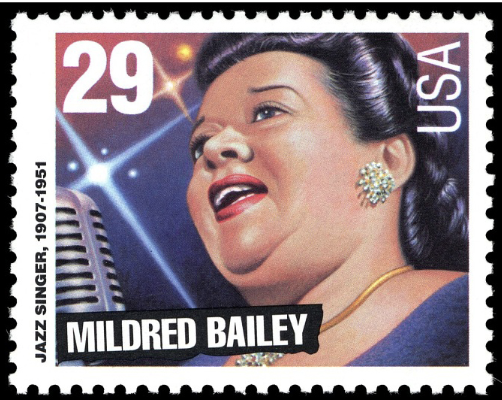
Mildred Bailey (1907-1951)
Coeur d’Alene Tribe
Mildred Bailey was born in Tekoa, Washington, and grew up near De Smet, Idaho on the family’s farm on the Coeur d’Alene Reservation.
Georgia on My Mind – Mildred Bailey, 1931
Instrument: Singer
- Role: Musician, Bandleader, Songwriter
- Years active: 1924-1949
- Genre: Jazz, vocal jazz, blues
- Discography: Mildred Bailey Albums and Discography | AllMusic,
- Credited with: Known as “The Queen of Swing”, first female to front a big band
- Associated with: Mildren Bailey and Her Orchestra; Casa Loma Orchestra, The Dorsey Brothers, Bing Crosby, Paul Whiteman, Red Norvo Orchestra, Hoagy Carmichael, Benny Goodman Orchestra, Teddy Wilson Orchestra, Gene Krupa, Coleman Hawkins, Roy Eldridge, Artie Shaw, Tony Bennett and many others.
- Honors and awards: 1989 Inducted in the Big Band and Jazz Hall of Fame; In 1994, a 29-cent stamp was issued by the US Postal Service in Bailey’s honor; In 2012, the Coeur d’Alene Nation introduced a resolution honoring Bailey to the Idaho state legislature to acknowledge the singer’s Coeur d’Alene ancestry as well as promote her induction to the Jazz at Lincoln Center Hall of Fame in New York City.
- Biography: “PLUMMER, Idaho – Jazz aficionados know Mildred Bailey as the legendary singer who cleared the way for female jazz greats like Billie Holiday and Ella Fitzgerald. Less well-known is the fact that Bailey was Native American. Now, the Coeur d’Alene Tribe in Idaho has launched a campaign to bring the singer — and her heritage — into the spotlight.
- “Mildred Rinker Bailey was one of the top-selling artists in Depression-era jazz.
- “To most audiences, Bailey looked white. But her mother was Coeur d’Alene Indian and Mildred spent her early years on the family’s farm on the Coeur d’Alene reservation in Idaho.
- “’I think it’s not known at all. Hardly anybody knew,’” says Coeur d’Alene Tribal Chairman Chief Allan.
- “The tribe is pushing to have Bailey inducted into the Lincoln Center’s Jazz Hall of Fame. They’re hoping a resolution now moving through the Idaho House will help achieve that goal.
Jim Boyd (1956-2016)
Confederated Tribes of the Colville Reservation
Jim Boyd was a member of the Arrow Lakes Tribe, one of the 12 tribes that make up the Confederated Tribes of the Colville Reservation and was serving as the Colville tribal chairman at the time of his passing.
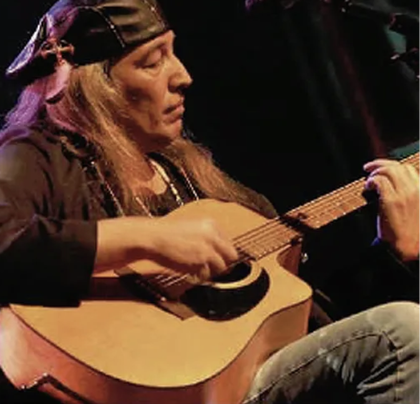
Colville Swiss – Jim Boyd
- His career as a musician spanned some 40 years. He was a singer, guitarist, songwriter, producer and bandleader who recorded 14 albums and contributed four songs to the 1998 movie Smoke Signals soundtrack.
- Jim received nine Native American Music Awards (NAMA) honorings, including Lifetime Achievement.
- In addition to his work as a solo artist or leading the Jim Boyd Band, he was a member of XIT, Greywolf and Winterhawk over the course of his career.
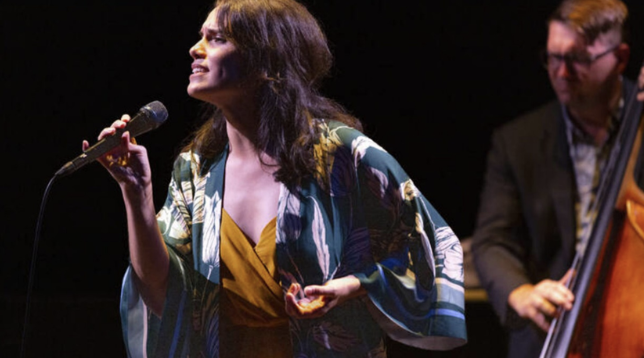
Julia Keefe
Nez Perce
Julia Keefe is a jazz vocalist, bandleader, conductor, educator, actor and activist based in New York City. She grew up on the Nez Perce reservation at Kamiah, Idaho, before moving to Spokane, where she began studying music and competing at the Lionel Hampton Jazz Festival at the University of Idaho.
- She won Outstanding Vocal Soloist in the alto division at the Lionel Hampton Jazz Festival at the University of Idaho in 2007.
- “She earned her Bachelor’s in music from the University of Miami’s Frost School of Music in 2012, graduating with honors. She taught jazz voice at Gonzaga University and was a guest clinician at North Idaho College and Lionel Hampton Jazz Festival before deciding to relocate to New York City. She earned her master’s in music from Manhattan School of music in 2019.” (Source: Artist website)
- Julia has headlined marquee events at the Smithsonian National Museum of the American Indian in Washington D.C. and New York City, as well as opened for 20-time GRAMMY Award recipient Tony Bennett and 4-time GRAMMY Award winner Esperanza Spalding. Her life’s work is the revival and honoring of the legendary Coeur d’Alene jazz musician Mildred Bailey and is leading the campaign for Bailey’s induction into the Jazz Hall of Fame at Lincoln Center. (See https://www.juliakeefe.com/mildred-bailey-project).
- Julia, along with the Delbert Anderson (Dine/Navajo) Quartet, had the honor of leading off the inaugural season at the new Patricia Valian Reser Center for the Performing Arts (PRAx) at Oregon State University in April 2024. She is also curating a series of three Indigenous Jazz Club performances at PRAx, highlighting “Native performers who are expanding on the long tradition of Indigenous jazz music….” (Source: PRAx website)
- For the past several years, in addition to performing as the Julia Keefe Quartet, she has led the creation of Julia Keefe’s Indigenous Big Band (JKIBB), which recently performed at the Kennedy Center, Washington, D.C.
Calina Lawrence
Suquamish
Of the Suquamish Nation, Calina Lawrence was born and raised within her ancestral culture at a time during the reawakening of the teachings of the canoe and the Coast Salish way of life in the Pacific Northwest.
.
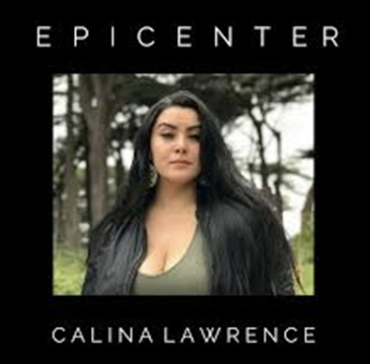
ʔəshəliʔ ti txʷəlšucid (Lushootseed is Alive) – Calina Lawrence
- Her vocal journey began at the young age of when she was first introduced to the songs of the canoe, the land, and the Lushootseed language. While lending her voice to the preservation of Suquamish traditions, she also grew to love many contemporary genres such as bluegrass, soul, hip hop and Spoken Word Poetry which would eventually lead her on her journey to respectfully expressing a fusion of it all.
- Many of the people who raised her emphasized the importance of spreading awareness about the social and environmental injustices that have impacted the quality of lives on tribal reservations and within urban Native communities. She embraced the awareness of intergenerational trauma combined equally with the examples of her people’s generosity and resiliency, so liberation work now shapes the lens in which the young artist sees the world.
- At age 23, Lawrence graduated with Honors from the University of San Francisco (‘16) attaining her BA in Performing Arts & Social Justice; a Music concentration.
- Since graduation, this Independent Indigenous vocalist, aspiring emcee and producer self-released her debut Album “EPICENTER” August , 2018.
- Her most significant Sing to-date released in August of 2019 entitled ‘“ʔəshəliʔ ti txʷəlšucid” one translation being “Lushootseed Is Alive.” It is her first self-produced/hip hop inspired/Salish fusion and in her words “Has been my largest accomplishment to-date, to have access to the language of my ancestors and have the ability to incorporate what I can into my every day life, including my career.”
- The song is written and performed entirely in the Lushootseed Language.It gestures several members of suquamish community while the Music Video was brought to ife by kanion Productions, a crew completely comprised of Indigenous creatives.
- All of her music, singles, features, and videos can be found on most streaming platforms.
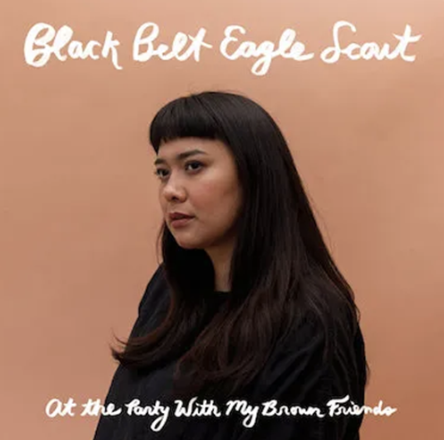
Katherine Paul
Swinomish/Inupiaq
Katherine Paul grew up in the Swinomish Indian Tribal Community on the Puget Sound in Washington. Her earliest musical experiences included listening to and singing indigenous music of the Coast Salish.
Black Belt Eagle Scout – My Blood Runs Through This Land [Official Video]
- “She was a jingle dress dancer at regional pow wows with her family’s drum group, the Skagit Valley Singers.”
- “At a young age, Paul began learning to play the piano and played the flute in her school band. Her interest in the guitar and drums began when she came into the possession of some bootleg VHS tapes of Hole and Nirvana, from which she taught herself to play those two instruments by pausing the tapes and studying the musicians’ fingerings and techniques.”
- “During high school Paul became involved in the small DIY music scene in Anacortes, Washington near the Swinomish Indian Tribal Community, driving her parents’ car to attend shows at the Department of Safety venue. The venue, located in an old firehouse, is where she met Canadian artist and musician Geneviève Castrée who became a mentor to Paul. An inspiration of Paul’s, Castrée would attend her early performances, encouraging her and praising her for her playing.”
- “In 2007, Paul moved from Washington to Portland, Oregon to attend college at Lewis & Clark College. While in Portland she became involved with the Rock and Roll Camp for Girls, and later contributed guitar, drums, and vocals for Portland-based bands Forest Park and Genders
Khu.eex
Intertribal – Tlingit, Haida, Yup’ik, Blackfoot
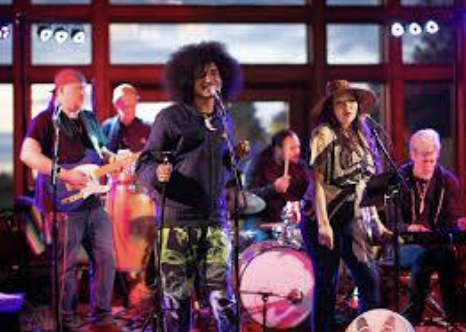
Canoe Song – Khu.eex at Seattle’s Town Hall
- Khu.éex’ began as a recording in 2013 after a chance meeting between Bernie Worrell and Preston Singletary.
- Together with Skerik and Stanton Moore, Gene Tagaban and Clarissa Rizal, Khu.éex’ recorded under the direction of Randall Dunn. Khu.éex’ has released a double album, “The Wilderness Within” and the triple LP “They Forgot They Survived”. In 2018, the triple LP “Héen” (which translates to “water” in the Tlingit language) was released.
- All albums were produced and released by the band independently.
- Khu.éex’ explores Jazz and Funk/Rock with an improvisational style. They fuse these styles with spoken word in English, Tlingit, Haida and Yup’ic languages; the preservation of these native languages though their music is fundamental to their vision as artists. This cross-fertilization results in a new sound.
- Performance art, using traditional masks and regalia accent their dynamic live performances. (Source: Official)

Lesson Closure
As mentioned in Lesson 1, this list of PNW artists is not meant to be an all-encompassing list of musicians and artists. Students should be aware that there are new artists coming up and they should seek out those new artists to broaden their musical listening and depth.
√ Distribute Exit Ticket #2
- What did you find memorable about these Pacific Northwest Native American musicians?
- Have you ever considered writing music? Have you ever done any kind of songwriting?