
Speak/Sing Native™ Artist Archive
Willie Dunn (1941-2013)
Mi’kmaq First Nation
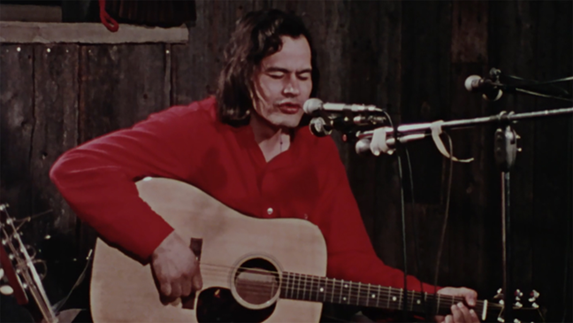
"It's important for aboriginal people to tell their own stories," Willie Dunn told his fans, "because Hollywood has done enough.” Mr. Dunn was given his unofficial middle name – Roha'tiio – by a Mohawk chief in Akwesasne. It means ‘his voice is beautiful.’
“A singer, songwriter and award-winning documentary filmmaker, Mr. Dunn was a trailblazer in the Native community. The spirit of his work was saturated with the lives and histories of aboriginal people. He always said that reclaiming a voice for Native people is critical because optimism and hope haven't brought change.
"Please understand that Willie and other activists, singers and poets of his generation had no role models to direct them …" said elder Albert Dumont. "The drum and our ceremonies came back into the light because of them."
(From obituary titled “First Nations troubadour Willie Dunn sang truth to power”)
Source: NOREEN SHANAHAN, SPECIAL TO THE GLOBE AND MAIL, PUBLISHED OCTOBER 23, 2013
Professional Information
Film:
1968 The Ballad of Crowfoot – National Film Board of Canada
Albums:
1972 Willie Dunn
1978 Akwesasne Notes
1980 The Pacific
1983 The Vanity of Human Wishes
1999 Metallic
2004 Son of the Sun
Singles:
1971 Schooldays
1973 I Pity the Country
Canadia National Film Board’s Indian Film Crew
Film:
1968 The Ballad of Crowfoot – National Film Board of Canada
Albums:
1972 Willie Dunn
1978 Akwesasne Notes
1980 The Pacific
1983 The Vanity of Human Wishes
1999 Metallic
2004 Son of the Sun
Singles:
1971 Schooldays
1973 I Pity the Country
1960 – 2013
Folk, Traditional
Musician, songwriter, storyteller, documentary filmmaker
Guitar, Vocals
Video
Son of the Sun - Willie Dunn
Venue:
Format: Official
Duration: 3:37
Children of the World - Willie Dunn, Susan Aglukark, Fara Palmer, Sylvie Barnard, Don Ross, Shingoose
Venue:
Format: Official
Duration: 4:39
Tribal Information
Mi’kmaq First Nation
.There are over 630 First Nations communities in Canada, which represent more than 50 Nations and 50 Indigenous languages. As in the United States, the Canadian Constitution is the supreme law of Canada.
Section 35 of the Constitution Act of 1982 explicitly recognizes and affirms the existing Aboriginal and treaty rights of the Aboriginal peoples of Canada. Section 35 also indicates that the term “Aboriginal peoples of Canada” includes the First Nation, Inuit and Métis peoples of Canada.
Further, section 25 of the Constitution Act, 1982 protects the Aboriginal and treaty rights that are recognized in section 35 and ensures that no other provision of the Charter can take away or supersede those rights.