
Speak/Sing Native™ Artist Archive
Derek Miller
Six Nations of the Grand River
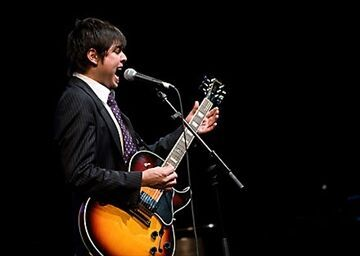
Derek Miller was born in the community of the Six Nations of the Grand River First Nation, Ontario, Canada, in 1974.
He released his debut album Music is the Medicine in 2002, which earned him a Juno Award in 2003 in the category Aboriginal Recording of the Year for Lovesick Blues. Juno awards are the Canadian equivalent of the Grammys.
In 2007, he released his album The Dirty Looks, which won Best Rock Album at the Canadian Aboriginal Music Awards, and Aboriginal Recording of the Year at the 2008 Junos. With 17 albums to his credit, Miller has shared a stage with artists such as Blood, Sweat & Tears, George Thorogood, Smokey Robinson and The Neville Brothers.
Miller has also appeared in supporting acting roles in film and television, including the films Moccasin Flats: Redemption, Fire Song and Point Traverse, and the television series Hard Rock Medical and Resident Alien.
In 2015, he compiled an album titled Rumble: A Tribute to Native Music Icons. Since 2015, he has also been the host of Guilt Free Zone, a variety and sketch comedy series on the Aboriginal Peoples Television Network. – (Source Wikipedia)
Professional Information
Rock, blues
Musician, songwriter, bandleader
Guitar, Vocals
Video
Voodoo Child - Derek Miller
Venue: Native Guitars Tour
Format: Official
Duration: 4:55
LInk Wray's Rumble - Derek Miller
Venue:
Format: Live
Duration: 5:24
Come And Get Your Love - Derek Miller
Venue:
Format: Live
Duration: 3:59
Indian Boy Blues - Derek Miller
Venue: Barrelhouse Club, Caledonia, Ontario
Format: Live
Duration: 3:17
Charly Lowry: Lumbee-Tuscarora Singer and Songwriter - Charly Lowry, Derek Miller (guitar), Andrew Ferrier MacKay (drums, and Gary Rugala (bass).
Venue: Library of Congress - American Folklife Center
Format: Official
Duration: 55:38
Tribal Information
Six Nations of the Grand River
.There are over 630 First Nations communities in Canada, which represent more than 50 Nations and 50 Indigenous languages. As in the United States, the Canadian Constitution is the supreme law of Canada.
Section 35 of the Constitution Act of 1982 explicitly recognizes and affirms the existing Aboriginal and treaty rights of the Aboriginal peoples of Canada. Section 35 also indicates that the term “Aboriginal peoples of Canada” includes the First Nation, Inuit and Métis peoples of Canada.
Further, section 25 of the Constitution Act, 1982 protects the Aboriginal and treaty rights that are recognized in section 35 and ensures that no other provision of the Charter can take away or supersede those rights.